Aside from nicotine and flavorings, the ingredients of nicotine pouches may be a mystery to many users. Detailed information isn’t always easily accessible, making it more difficult to know exactly what you’re putting in your mouth.
We’ll provide some answers by comparing the pouch ingredients of four of the most popular brands: ZYN, ON!, Rogue, and VELO. We’ll also discuss the types of nicotine used in pouches, as well as potential dietary concerns posed by ZYN ingredients.
Nicotine pouch ingredients
Although brands may use different ingredients and proprietary formulations, they usually fit into the following categories:
- Nicotine: nicotine bitartrate dihydrate or nicotine polacrilex
- Sweeteners: acesulfame K, sucralose, aspartame, xylitol
- Stabilizers: hydroxypropyl cellulose (HPC), sodium alginate, propylene glycol (PG), vegetable glycerin (VG)
- Fillers/binders: cellulose powder, maltitol, gum arabic
- pH adjusters: sodium carbonate, sodium bicarbonate
- Flavorings
Nicotine-free pouches often use many of the same supporting ingredients, but usually substitute caffeine or other ingredients for nicotine. If you’re considering those products, learn more about caffeine pouch ingredients and potential health risks.
Now, let’s explore the specific nicotine pouch ingredients used by some of the most popular brands. Note that we are only reporting on ingredients that have been confirmed by the manufacturers, which is why some lists are more detailed than others.
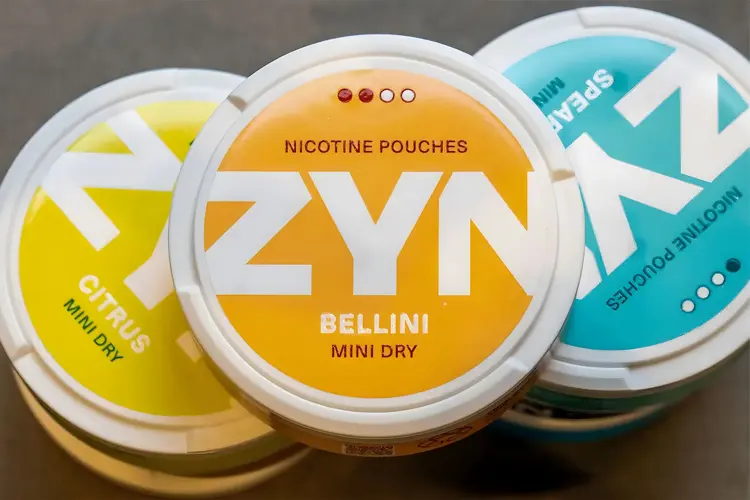
ZYN ingredients
Nicotine bitartrate dihydrate, hydroxypropyl cellulose, microcrystalline cellulose, maltitol, gum arabic, sodium carbonate, sodium bicarbonate, flavorings, and acesulfame K.
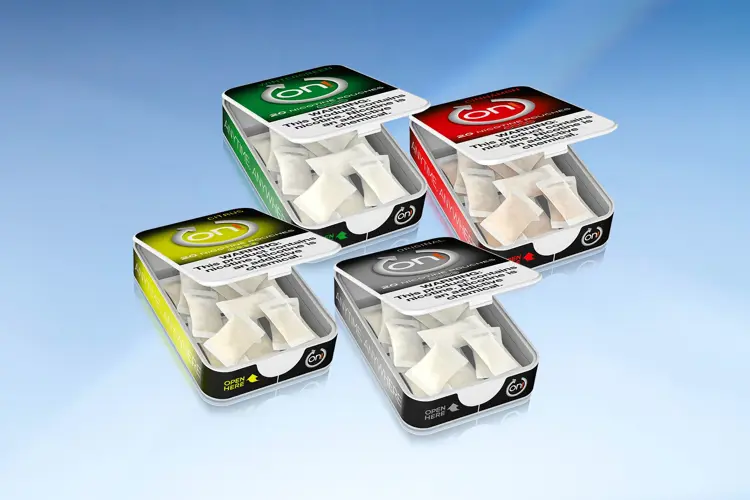
ON! nicotine pouches ingredients
Nicotine bitartrate dihydrate, acesulfame K, maltitol, cellulose powder, sodium carbonate, propylene glycol, and flavorings.
Rogue nicotine pouches ingredients
Nicotine polacrilex, acesulfame K, flavorings, and inactive food-grade ingredients.
Rogue declined our request to elaborate on the inactive food-grade ingredients.
VELO nicotine pouches ingredients
Pharmaceutical-grade nicotine, microcrystalline cellulose, water, sodium chloride, xylitol, flavorings, sodium alginate, sucralose, sodium bicarbonate, and acesulfame K.
Type of nicotine used in ZYN and other pouches
The nicotine in ZYN and many other pouch brands is pharmaceutical-grade nicotine bitartrate dihydrate. It is a water- and alcohol-soluble powder that is free of ground, cut, and leaf tobacco. The bitartrate salt increases the absorption efficiency of nicotine and reduces harshness.
Nicotine polacrilex (used by Rogue) is different from nicotine salt. It is made by steam-extracting nicotine from the tobacco leaf and then binding it with an ion-exchange resin.
Both nicotine bitartrate dihydrate and nicotine polacrilex are also commonly used in other consumer oral nicotine products and nicotine replacement therapy (NRT) products, such as lozenges, gum and transdermal patches.
ZYN nutritional facts
Do ZYN ingredients contain sodium, gluten, or lactose? These are valid concerns for those with dietary restrictions. Let’s have a quick look at the nutritional components of these popular nicotine pouches.
- Calories: ZYN contains less than one calorie per pouch. That is significantly less than a stick of sugar-free gum, which contains three to six calories on average.
- Fat: unknown. If they do contain fat, it would likely be a negligible amount.
- Carbohydrates: according to ZYN, their pouches contain “less than 1% of the daily recommended carbohydrate allowance based on a 2,000 calorie per day diet.” That works out to less than four carb calories per portion.
- Lactose: none
- Gluten: ZYN is technically gluten-free. This is based on the FDA’s standard for gluten-free products, which is less than 20 parts per million.
- Sodium: one portion may contain up to ten milligrams of sodium.


UK smoking falls to a record-low 9.8% in 2025, while 5.4 million adults vape in Great Britain, according to new government statistics.

PMI says heated tobacco exceeds 50 percent of Japan’s nicotine market as IQOS, Ploom, and glo compete amid changes to the country’s tobacco taxes.

KT&G targets premium products, Philip Morris expands into vaping, and BAT focuses on heated tobacco in South Korea’s alternative nicotine market.

A GAO audit found nearly 132,000 FDA tobacco applications unresolved at the end of 2025, with an average wait of 1,266 days for a decision.
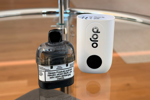
The DOJO BLAST X combines a 10 mL refill system, a dual-mesh coil, and a 1000 mAh battery. Is it needlessly confusing? Read our review to find out.
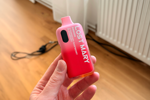
The Lost Mary BM6000 is a pre-filled pod vape that pairs a 2 mL pod with a 10 mL refill container and a QUAQ mesh coil. Read our review to learn more.
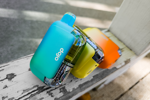
The DOJO PUREX 60K is a disposable vape with a 1000 mAh battery, 16 mL INSTA-JUICED tank, and two power modes. Read our review to learn more.
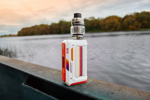
Is the VAPORESSO ARMOUR OCTA the best box mod of 2026? We test its performance, explore its features, and explain its biggest design drawback.