Norwich City Council has backed a call for ministers to introduce a deposit-return system for every vape device sold, after recent waste-facility fires have focused local attention on the lithium-ion batteries inside discarded vapes.
The proposal is not a national rule, and Norwich cannot impose it across the United Kingdom on its own. But the June 30 council debate gives the government another local-government nudge toward treating vape products as waste-management liabilities after sale, not just regulated nicotine products at the till.
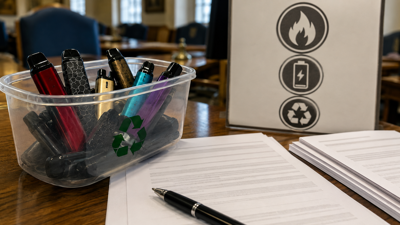
The motion, reported by the Norwich Evening News, calls for a £5 deposit to be added to the purchase price of a vape. The money would be refunded when the device is returned. The plan was tabled by James Wright, former Norwich lord mayor and leader of the council’s Liberal Democrat group. Wright said councils are paying for fires, contaminated recycling, and clean-up when lithium batteries are thrown into ordinary waste.
The problem is real. Norfolk Fire and Rescue Service said a recent Costessey waste-transfer-centre fire was most likely caused by a lithium-ion battery. The service said compacted waste can damage battery cells and trigger thermal runaway, the overheating process that can turn a small battery into a fast-moving fire.
Norfolk County Council says vapes are among common household products containing lithium-ion batteries, and that the county fire service recorded 10 lithium-battery fires in 2025, up from five in 2024 and four in 2023. Its public safety guidance says damaged batteries can start fires that spread quickly.
A June 22 blaze at a recycling centre in Widnes made the same point on a much larger scale. Circular reported that Cheshire Fire and Rescue Service found the fire was most likely caused by a disposable vape battery placed in general waste or recycling. About 450 tonnes of waste were involved, and 20 fire engines were deployed.
The government already made it illegal for businesses to sell or supply single-use vapes on June 1, 2025. The GOV.UK business guidance says the ban applies online and in shops to nicotine and non-nicotine products, but reusable vapes remain legal.
That ban has not made vape waste disappear. Material Focus, a recycling nonprofit, said in March that more than 6.3 million vapes and pods are still thrown away every week. The group said retailers already have a long-standing duty to offer take-back, but recycling a vape is still not as easy as buying one.
The new Tobacco and Vapes Act 2026 gives ministers broad new powers over tobacco, vaping, nicotine products, retail licensing, product requirements, advertising, and public-place rules. The UK Parliament bill page lists the act as current law, after Royal Assent on April 29.
For adult vapers, the lesson from Norwich is simple: prohibitionists have already banned the the most convenient products, and now councils are still left with batteries in the waste stream. A deposit system would not be another health claim dressed up as policy. It would be a blunt environmental charge intended to prompt consumers to return the hardware.


CBG (cannabigerol) is the mother of all cannabinoids, including CBD and THC. Learn more about CBG flower, its effects, strains, and whether it can get you high.

Learn how old you have to be to buy caffeine pouches, including federal and state age restrictions, retailer policies, and rules for minors.

Learn whether caffeine pouches are safe, including potential side effects, caffeine limits, oral health risks, and who should avoid them.

Because of declining cigarette sales, state governments in the U.S. and countries around the world are looking to vapor products as a new source of tax revenue.