- Medical marijuana cards let patients legally buy cannabis in states without recreational weed.
- Qualifying typically requires a doctor’s approval, a listed medical condition, registration, and a yearly fee.
- Cardholders can only buy in-state and must shop for themselves; cards usually expire after one year.
- Some states don’t issue physical cards but still allow limited THC products via doctor approval.
- Costs and product access vary—MMJ isn’t covered by insurance, and some states only allow low-THC options.
Before legal recreational cannabis took off in the United States, medical marijuana programs were already sprouting across the country. Many states still operate these programs, regardless of whether they allow recreational use.
My first experiences with cannabis were in a state where recreational weed was legal, but that changed when I moved back home to Pennsylvania. For the first time, I had to register and obtain a medical marijuana card to continue accessing marijuana (which is federally defined as cannabis containing over 0.3% delta 9 THC).
The process varies by state, of course, but is generally not hard to navigate. Here’s what you need to know about qualifying for and getting a medical card.
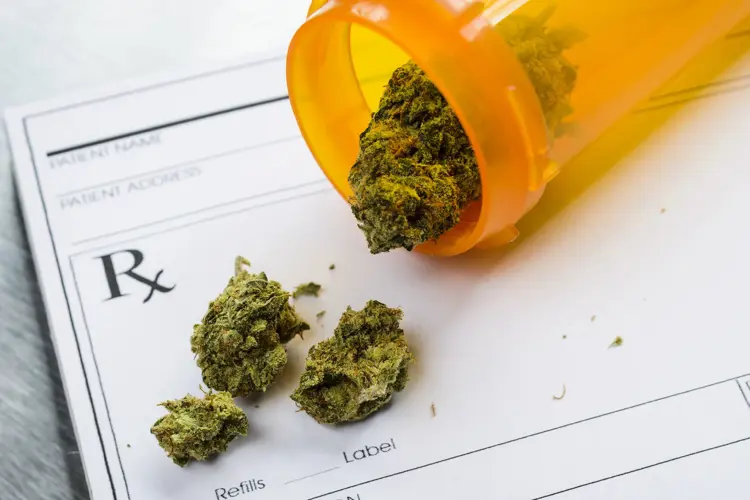
What is a medical marijuana card?
A medical marijuana (MMJ) card is a state-issued ID that allows eligible patients to legally purchase and use cannabis for medical purposes, even in states where recreational use is illegal. Many states without legal recreational cannabis have MMJ programs—including Pennsylvania, where I live.
Each state sets its own list of qualifying conditions, so having a medical diagnosis doesn’t always mean you’ll be eligible for a card. The process typically involves getting a doctor’s approval, registering with your state program, and paying a fee. Once approved, you’ll receive an MMJ card, which is presented at medical dispensaries for entry and purchases. Your card must be valid, unexpired, and usually issued by the state where you’re shopping. Some states (although not PA) allow patients with out-of-state medical cards to buy cannabis while they’re visiting, but usually at the dispensary staff’s discretion.
Patients without a designated caregiver are required to buy their own cannabis. You can’t ask a friend or family member to pick up the order on your behalf.
MMJ cards must be renewed regularly. They're valid for one year in PA, as is common in other states.
Which states have medical marijuana programs?
While the number of states with recreational weed is growing quickly—and some states have separate recreational and medical programs—several states allow medical cannabis sales only. As of February 2025, medical-only states include:
- Alabama
- Arkansas
- Florida
- Hawaii
- Kentucky
- Louisiana
- Mississippi
- New Hampshire
- North Dakota
- Oklahoma
- Pennsylvania
- South Dakota
- Utah
- West Virginia
Several other states give qualifying patients access to products containing limited THC levels (but still over the federal THC limit of 0.3%):
- Georgia
- Iowa
- Texas
What conditions qualify me for a medical marijuana card?
Qualifying medical conditions depend on your location. While the criteria are similar across the U.S., it's essential to check your state's specific requirements.
Generally, you’ll need to be diagnosed with a serious chronic or terminal condition to get approved—but some states take “serious” more seriously than others. The speed and ease of obtaining a card also depend on where you live.
Common qualifying conditions include (but aren’t limited to):
- Cancer
- Epilepsy
- HIV/AIDS
- Inflammatory bowel disease (Crohn’s, ulcerative colitis)
- Multiple sclerosis (MS)
- Neurodegenerative disorders
- Opioid use disorder
- Parkinson’s disease
- PTSD
- Terminal illness
How to get a medical marijuana card
The process is similar across states, but the exact steps vary.
To give you an idea of what to expect, I'll give a quick rundown on the MMJ programs in four states: Pennsylvania, Florida, Texas, and Louisiana. If you're in a different state, be sure to check its specific procedure and list of qualifying conditions.
How to get a medical marijuana card in Pennsylvania
Pennsylvania’s MMJ program is the only one I have first-hand experience with. I received my first PA medical marijuana card in December 2022.
To get a medical marijuana card as a PA resident, you’ll need to:
- Check eligibility: Review Pennsylvania’s list of qualifying conditions to ensure you’re eligible.
- Register online: You can sign up for the program before your appointment, but you won’t get your card until a doctor approves you.
- Consult a physician: You must see a doctor from the Pennsylvania Department of Health's list of approved practitioners. I’d strongly recommend using an online service like Veriheal or NuggMD to book your appointment—I got one the next day. To schedule, I provided photos of my ID and details about my previous diagnosis for a qualifying condition, including prescribed medications.
- Pay for your card: If approved, you’ll pay $50 annually, unless you qualify for financial assistance.
- Receive your card: Your card will arrive in the mail in one or two weeks, but you won’t be able to use it until its “active” date. You must have the card on your person to make purchases at a medical dispensary.
- Shop at a dispensary: Card in hand, you can now buy from licensed PA dispensaries. Just remember that your certification is only valid in Pennsylvania.
I can’t say I have complaints about the process, since it was all sorted within a couple of weeks. The only challenge was the lack of dispensaries in rural PA.
Keep in mind that this is a medical program, and not everyone can qualify. I can’t speak for others, but as someone with a qualifying illness, I had no issues getting approved. It was a smooth process.
How to get a medical marijuana card in Florida
Florida established its medical marijuana program in 2016. The process is similar to Pennsylvania’s, but costs, doctor visit requirements, and other details differ. To qualify, you must be a full-time or seasonal Florida resident.
To get an MMJ card as a Florida resident, you’ll need to:
- Check eligibility: While Florida’s list of qualifying conditions appears short, comparable diagnoses can still qualify.
- Consult a physician: You can use Florida’s qualified physician search tool to find a practitioner. If approved, you’ll be emailed registry login credentials from the Office of Medical Marijuana Use (one email for your username, another containing a temporary password).
- Register online: You’re now ready to apply for an ID card. Paper applications are also available.
- Pay for your card: If approved, you’ll pay a $75 annual fee, but you’ll also need to visit a physician every seven months to stay certified. Those appointments come with an additional cost.
- Receive your card: You'll first receive a temporary card, allowing you to shop for products before your physical card arrives in the mail.
- Shop at a dispensary: Finally, you can shop at licensed Florida dispensaries, with cannabis delivery services also available.
How to get a medical marijuana card in Texas
The MMJ program in Texas works differently than in Florida and Pennsylvania, and the product selection is far more limited.
Texas doesn’t issue physical MMJ cards and operates through the Compassionate Use Program (CUP), allowing doctors to prescribe low-THC products to registered patients.
To get a medical marijuana card as a Texas resident, you’ll need to:
- Check eligibility: Begin by reviewing the list of qualifying conditions in Texas.
- Consult a physician: Next, you can use services like the Texas Cannabis Clinic or Green Health Docs to schedule a telehealth appointment with a qualified doctor.
- Shop at a dispensary: You can buy tincture, gummies, or ointments once you’re registered in the Compassionate Use Registry of Texas (CURT). Again, you receive no physical card.
Unlike other states, Texas doesn’t charge a registration or card fee. Products can’t contain over 1% delta 9 THC—but there’s no cap on total THC content.
How to get a medical marijuana card in Louisiana
As in Texas, Louisiana MMJ patients don’t receive a physical card. The process is also extremely similar—though medical products may contain over 1% THC.
- Check eligibility: Louisiana provides medical cannabis to residents with debilitating conditions, but unlike some states, the state’s list of qualifying conditions is explicitly flexible. Doctors can use their “clinical opinion.”
- Consult a physician: Patients can schedule appointments through services like Transformative Health Center or Louisiana Medical Marijuana Doctors.
- Shop at a dispensary: Once your prescription is issued and added to the state registry, you can purchase MMJ products from any of Louisiana’s 10 licensed dispensaries.
In Louisiana, medical marijuana is treated like any other prescription, and dispensaries operate similarly to pharmacies. Patients only need to cover the cost of their consultation and products. There are no additional state fees or registration costs.
How to get a medical marijuana card: FAQ
How much does a medical marijuana card cost?
It can vary significantly depending on the state you live in.
Expect to pay between $25 and $200 for the card. The cost of your appointment with a qualified physician also varies, and that price isn’t determined by the state.
For reference, I paid about $90 for my Pennsylvania doctor’s visit (which probably wasn’t the cheapest option) and $50 for my card. Unfortunately, medical products in PA can still be pricey, despite the lack of sales tax—a perk not every state offers.
It’s also worth remembering that your MMJ card costs aren’t a one-time fee. You could pay less for the renewal than your initial card, but cards usually must be renewed annually.
If you’re low-income or disabled, I also recommend checking whether your state offers free or reduced-cost cards.
What medical marijuana products are available?
Again, it’s state-dependent. My state offers a variety of forms, including flower, tincture, and capsules—but no edibles.
I touched upon it earlier, but certain states with medical cannabis (such as Texas and Georgia) have harsher restrictions. You won’t be able to purchase regular marijuana flower, since these states put a cap on THC content, typically by dry weight percentage.
Is medical marijuana covered by insurance?
No, medical marijuana isn’t covered by any U.S. insurance providers, including private insurance, Medicaid, and Medicare. It doesn’t matter which state you live in or how comprehensive your insurance plan is.
Delta 9 THC is still illegal at the federal level. Until the federal government legalizes it, no U.S. insurance company will consider covering MMJ cards, products, or doctor appointments. It’s the same reason banks avoid marijuana, preventing you from paying for legal marijuana products with a credit card.
What can I do if my state doesn’t have medical or recreational marijuana?
If your state doesn’t allow either medical or recreational marijuana, you may still be able to access hemp-derived cannabis products. I recommend HHC, or delta 8 THC products, which are intoxicating like the delta 9 THC in marijuana, but milder. Laws vary by state, but HHC, delta 8, and other psychoactive hemp products are allowed in many places.


Eight EU governments want a ban on new nicotine products, broad flavor restrictions, and tighter rules for vapes and nicotine pouches.
UK expands age-18 rules to nicotine-free vapes and nicotine pouches on Oct. 29, banning vending machines, promotional giveaways, and major discounts.

UK smoking falls to a record-low 9.8% in 2025, while 5.4 million adults vape in Great Britain, according to new government statistics.

PMI says heated tobacco exceeds 50 percent of Japan’s nicotine market as IQOS, Ploom, and glo compete amid changes to the country’s tobacco taxes.
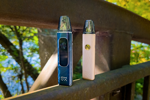
Check out our OXVA XLIM 4 and XLIM PRO 4 review to learn about the new UNITECH 3.0 pods and the incredibly innovative anti-burn tech (ABT).
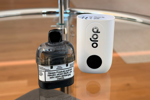
The DOJO BLAST X combines a 10 mL refill system, a dual-mesh coil, and a 1000 mAh battery. Is it needlessly confusing? Read our review to find out.
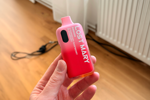
The Lost Mary BM6000 is a pre-filled pod vape that pairs a 2 mL pod with a 10 mL refill container and a QUAQ mesh coil. Read our review to learn more.
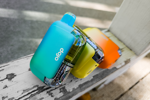
The DOJO PUREX 60K is a disposable vape with a 1000 mAh battery, 16 mL INSTA-JUICED tank, and two power modes. Read our review to learn more.